Richardton, North Dakota is a town of fewer than 800 people in the rolling plains of Stark County. It has a high school, a short list of locally owned restaurants and businesses, and just outside of town sits an ethanol plant that captures its own carbon dioxide and buries it more than a mile underground. That plant is Gevo North Dakota.
The Gevo facility is the largest employer in the area, with 47 community jobs, and a major local taxpayer. In 2025 we paid $86.43 million to farmers within 75 miles for biomass. Those dollars land in the same places the employees do: the school, the main street, the family farms.
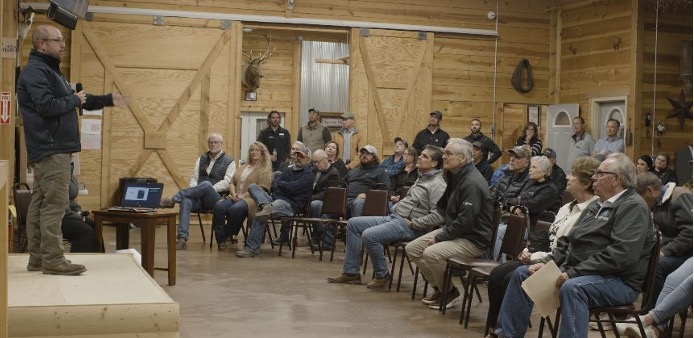
So what does it mean to be an embedded member of a community this size? If a local stakeholder has a question or a grievance, they can reach the facility through a dedicated community website. Or they can do what most of them would do anyway and call the plant manager, whose number they already have. That kind of access isn’t a policy. It’s who we are.
It started with farmers who wanted a home for their grain
In 2007, a group of local farmers pooled their resources to fund an ethanol plant. The logic was straightforward: the facility would give them an economic home for their corn, and because pet and livestock feed is a co-product of ethanol production, it would also give them a local source of feed for their cattle. No more trucking it in from far away.
Ten years later, that same group voted to go further. They chose to make Red Trail Energy the first ethanol plant in North Dakota to voluntarily capture and permanently sequester its carbon underground. The local community was consulted on the project, and the facility began issuing carbon credits in 2022. Gevo purchased Red Trail Energy in 2025.
Every step of that sequence was a decision made by people who live within driving distance of the plant.
Rooted in the land
Our #2 yellow dent corn feedstock comes almost entirely from within 75 miles of the facility, sourced directly from over 400 local family farms, many of them multi-generational. For most of those farms, Gevo North Dakota is the closest buyer they have ever had.
We work with these farmers as partners rather than simply as suppliers. Through Gevo’s Verity platform, we provide agronomists and carbon-tracking tools that help farmers adopt regenerative agriculture practices. Reduced tillage and lower fertilizer use improve the health of the land, reduce erosion, and improve surrounding watersheds. These outcomes that outlast any single harvest or contract.
When local supply has fallen short in drought years, we have had to source by rail from further away. Otherwise, the food on the table and the fuel in the tank both start a few miles down the road.
“The project enables local farmers to grow and diversify their commodities, and will allow smaller communities like Richardton to thrive.” — Neal Messer, Stark County Commission Chairman, Richardton native and small grains farmer
What comes next
Gevo plans to convert approximately 75% of the ethanol produced at this facility into Sustainable Aviation Fuel – one of the most meaningful ways to decarbonize an industry that is likely decades away from electrification.
That transition and expansion means more investment, more jobs, and a deeper economic footprint in Richardton and the surrounding region. It also means the farmers supplying corn to this facility will have a direct link to the aviation fuel in the tank of a commercial aircraft.
The story of Gevo North Dakota is a story that started with local farmers who wanted a better future for their land and their community. It’s still that story. It always will be.
Want to learn more about how we’re making an impact in North Dakota? Reach out.